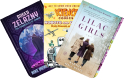
"A thrilling, transportative adventure that is everything promised–Chakraborty's storytelling is fantasy at its best." -- R.F. Kuang, #1 New York Times bestselling author of Babel and The Poppy War
"An exhilarating, propulsive adventure, stitched from the threads of real history, Amina’s adventures are the reason to read fantasy." -- Ava Reid, internationally bestselling author of Juniper & Thorn
Shannon Chakraborty, the bestselling author of The City of Brass, spins a new trilogy of magic and mayhem on the high seas in this tale of pirates and sorcerers, forbidden artifacts and ancient mysteries, in one woman’s determined quest to seize a…
Living in the Blackwood family home with only her sister, Constance, and her Uncle Julian for company, Merricat just wants to preserve their delicate way of life. But ever since Constance was acquitted of murdering the rest of the family, the world isn't leaving the Blackwoods alone. And when Cousin Charles arrives, armed with overtures of friendship and a desperate need to get into the safe, Merricat must do everything in her power to protect the remaining family.
What makes for the ideal woman? How should she look, love and be? In this vibrant, high-spirited history, medievalist Eleanor Janega turns to the Middle Ages, the era that bridged the ancient world and modern society, to unfurl its suppositions about women and reveal what's shifted over time-and what hasn't.
Enshrined medieval thinkers, almost always male, subscribed to a blend of classical Greek and Roman philosophy and Christian theology for their concepts of the sexes. For the height of female attractiveness, they chose the mythical Helen of Troy, whose imagined pear shape, small breasts, and golden hair served as…
Old English is the language you think you know until you actually hear or see it. Unlike Shakespearean English or even Chaucer’s Middle English, Old English — the language of "Beowulf" — defies comprehension by untrained modern readers. Used throughout much of Britain more than a thousand years ago, it is rich with words that haven’t changed (like "word"), others that are unrecognizable (such as "neorxnawang" or paradise), and some that are mystifying even in translation ("gafol-fisc", or tax-fish). In this delightful book, Hana Videen gathers a glorious trove of these gems and uses them to illuminate the lives of the earliest English speakers. We discover a world where choking on a bit of bread might prove your guilt, where fiend-ship was as likely as friendship, and where you might grow up to be a laughter-smith.