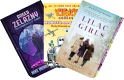
When you think there is nothing left to say about the Beatles, a new book always appears. Where The Music Had to Go is Bob Dylan’s quote about the Beatles’ music. The book brings together the instances when the Beatles and Bob Dylan intersected and ultimately influenced each other. Although the facts are known, the book succeeds by presenting them all in chronological order. At first, they didn’t connect with each other’s music, but when Dylan heard “I Want to Hold Your Hand,” he knew he’d heard the future. The Beatles eventually connected with the lyrics and music of the folk hero. During the mid-sixties, they both changed the direction of their music. Dylan went electric, and the Beatles experimented with new instruments and recording styles. John Lennon was most influenced by Dylan, and his lyrics became more mature and soul-searching. His new songs, such as “You’ve Got to Hide Your Love Away” and “Norwegian Wood,” influenced Dylan’s “Fourth Time Around,” with the egos of both artists accusing the other of copying. Almost thirty years after John Lennon’s death, Bob Dylan’s pilgrimage to Lennon’s childhood home is proof enough of the regard and respect he felt. Dylan’s friendship with George Harrison is where he found the most receptive musical comradeship. Harrison was the Beatle most open to collaborating with other musicians, and they found their perfect partnership in The Traveling Wilburys. A fascinating read.
FEATURING AN EXCLUSIVE NEW INTERVIEW WITH SIR PAUL McCARTNEY
'An astonishing amount of research' NEW YORK TIMES 'An easy and addictive read' MOJO THE TELEGRAPH 'Meticulously [and] lovingly told in this delightful history' JANN WENNER
Persuasive, captivating and bursting with insight, this dual biography by acclaimed journalist Jim Windolf dives into the surprisingly supportive, occasionally rivalrous, always fertile relationship between Bob Dylan and the Beatles.
Few artists have shaped pop culture as profoundly as the Beatles and Bob Dylan. In Where the Music Had to Go, Jim Windolf offers a new, persuasive interpretation of how two of the twentieth century's…
In a world where we hear about authors being accused of using AI to write their novels, physically stealing someone else’s work feels almost like an analog crime. Many books, including The Plot by Jean Hanff Korelitz, use this trope, and many people have accused authors of plagiarism throughout the years. Yellowface, by R. F. Kuang, takes it a step further. Besides co-opting her deceased friend’s novel, June also presents herself as an Asian writer, not the white woman she is. The book she passes as her own is “about the unsung contributions and experience of the Chinese Labor Corps, the 140,000 Chinese workers who were recruited by the British Army and sent to the Allied Front during World War I.” With success comes scrutiny from social media, readers, and insiders. June is now constantly looking over her shoulder and realizes she has no follow-up to present to her publisher. The book skewers the publishing industry, tackles cultural appropriation and tokenism. It is hard to agree with everything the author is trying to push and even harder to like the main characters. Still, it's a page-turner.
The No. 1 Sunday Times and New York Times bestseller from literary sensation R.F. Kuang
*A Reese Witherspoon Book Club pick*
'Propulsive' SUNDAY TIMES
'Razor-sharp' TIME
'A wild ride' STYLIST
'Darkly comic' GQ
'A riot' PANDORA SYKES
'Hard to put down, harder to forget' STEPHEN KING
Athena Liu is a literary darling and June Hayward is literally nobody.
White lies When Athena dies in a freak accident, June steals her unpublished manuscript and publishes it as her own under the ambiguous name Juniper Song.
Take me back to the 2000s. Percy is a college student with a love of music. Joey is a musician. It is not long before Percy is helping Joey by critiquing his music and giving lyric suggestions, all while keeping her crush on Joey in check. As their songwriting evolves, so does their relationship, although Joey doesn’t want to ruin their dynamic with anything physical. By the time Joey’s band achieves success, she is only acknowledged with a “thanks” on the album sleeve, without giving her co-writing credit. This hinders their interactions through the years, and Percy hopes for something more from him. Percy completes her MFA, becomes a music blogger, and writes a song for another band, all the while following Joey’s career. Sometimes you want to slap both of the main characters, but along with the pop culture references, that is part of the story.
William Holman Hunt wants his own revolution. In the year 1848 Europe erupts in turmoil, but Hunt is an art student, with many dreams and limited funds, in a London where revolution is just not done - especially one against the art establishment. Hunt, along with six friends and fellow students - including the prodigy John Everett Millais and the artist-poet Dante Gabriel Rossetti - proclaim themselves the Pre-Raphaelite Brotherhood (PRB). They plan to display their new art at the most prestigious exhibition in the country: The Royal Academy of Art. They were expecting criticism, praise, or even ambivalence. What they were not expecting was the violent abuse hurled at them by the art elite, journalists, and even Charles Dickens. The stale and stodgy art world of mid-Victorian London will not tolerate these upstarts. The defiant PRB will not back down. Now it really is a revolution. Can the young PRB survive the attacks against them? Can their friendship survive growing up?