I
had heard of the Lost Boys of Sudan before reading this, but they didn’t feel
real to me – theirs was a story I was disconnected from. In this book, Eggers connected me.
He follows one boy from age seven through
young adulthood as he treks across Sudan alone at times and with many other
boys at other times, separated from his family and pursued by armed militants who
want to kill them.
We get to see how the
global greed for oil can destroy people who are totally non complicit. We get to see a child face obstacles most
adults couldn’t survive. It is a lesson
in the resilience of people and a reminder that we must never underestimate the
depth of understanding children have.
Because I write stories for children and
because I often deal with situations that are complex and difficult, I
appreciate it so much when an author confirms for me the humanity of children
and, thus, their need for stories that deal with complex and difficult
situations.
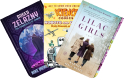
NEW YORK TIMES BESTSELLER • The epic novel based on the life of Valentino Achak Deng who, along with thousands of other children —the so-called Lost Boys—was forced to leave his village in Sudan at the age of seven and trek hundreds of miles by foot, pursued by militias, government bombers, and wild animals, crossing the deserts of three countries to find freedom.
When he finally is resettled in the United States, he finds a life full of promise, but also heartache and myriad new challenges. Moving, suspenseful, and unexpectedly funny, What Is the What is an astonishing novel that…
I had heard of Dr. Mengele’s experiments in genetics in WWII, but nothing
specific. I didn’t know, for example,
that he looked at twins and that he tortured children.
In this book, we follow twin girls, where
chapters go back and forth between their points of view. The author does a stunning job of helping us
see how a given situation can be interpreted differently by different
characters and how the bravura of a character might be camouflage for
tremendous fear.
Here, the children are
resilient and extraordinarily decent in the face of hideous choices. It is far too easy to underestimate
children’s understanding of morality. I
was grateful for every page of this book.
It's 1944 when the twin sisters arrive at Auschwitz with their mother and grandfather. In their benighted new world, Pearl and Stasha Zagorski take refuge in their identical natures, comforting themselves with the private language and shared games of their childhood. As part of the experimental population of twins known as Mengele's Zoo, the girls experience privileges and horrors unknown to others, and they find themselves changed, stripped of the personalities they once shared, their identities altered by the burdens of guilt and pain.
That winter, at a concert orchestrated by Mengele, Pearl disappears. Stasha grieves for her twin, but…
The author had a great idea: to give us a history of
New York City by offering us pages of the diaries of famous people and obscure
figures from the early 1600s up through the first decade of the 21st
century.
She goes day by day through a
year – with multiple entries from different years and different diaries for
each of those days.
We get to see
comments on the major political and historical events that shook not just New
York but the country and the world, from perspectives that differ drastically
from today’s. She was masterful in
choosing the diary entries.
My writing
is often historical fiction, and getting inside the mind of someone a few
hundred years ago is simple about some things – timeless things – but a
challenge about other things. I have to
be constantly vigilant to keep my modern mentality from interfering. So I loved the undeniability of the diaries.
New York is a city like no other. Through the centuries, she’s been embraced and reviled, worshipped and feared, praised and battered—all the while standing at the crossroads of American politics, business, society, and culture. Pulitzer Prize winner Teresa Carpenter, a lifelong diary enthusiast, scoured the archives of libraries, historical societies, and private estates to assemble here an almost holographic view of this iconic metropolis. Starting on January 1 and continuing day by day through the year, these journal entries are selected from four centuries of writing—revealing vivid and compelling snapshots of life in the Capital of the World.
This is a read-before-going-to bed story, about the child who has trouble accepting sleep. It's a STEM book about other creatures that don't sleep at night -- from teeny ones to huge ones. The food chain is in there. And the illustrations are magnificent. It's a fun read aloud.