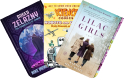
This book filled in many of my understanding-gaps
related to China’s seeming priorities and overt behaviors in global politics.
The author has credible authority on the subject, and
he broke down the prime motivations for those in charge of the CCP concisely
and comprehensively, and after finishing the book, some of the things the
Chinese government does (and prioritizes) made a lot more sense.
Working in journalism, anything that bolsters my
understanding of big-picture forces that exert gravity on global events is
appreciated, and that was absolutely the case with The Avoidable War.
The relationship between the US and China, the world's two superpowers, is peculiarly volatile. It rests on a seismic fault-of cultural misunderstanding, historical grievance, and ideological incompatibility. No other nations are so quick to offend and be offended. Their militaries play a dangerous game of chicken, corporations steal intellectual property, intelligence satellites peer, and AI technicians plot. The capacity for either country to cross a fatal line grows daily.
Kevin Rudd, a former Australian prime minister who has studied, lived in, and worked with China for more than forty years, is one of the very few people who can offer…
I read a lot of science fiction, and though space
operas and traditional hard sci-fi romps can be fun, I love encountering truly
new and original ideas that give me pause, make me feel uncomfortable, and/or
force me to question my understandings and beliefs.
I personally found the short stories in this book
uneven—some just weren’t for me, or weren’t as compelling as others—but the
number of original and fascinating stories without obvious comparison or kin
that it contains is remarkable, and I found myself changing my mind about (or
seriously questioning) a few long-held opinions after reading and mulling them
over.
The
story of art history that most of us are taught is superficial and incomplete,
but it can be a non-trivial task figuring out who else (and which
sub-movements) should be looked into, and how to find more information about
those people and happenings when so much of the field’s scholarship has been
aimed at one group of people.
This
book does a great job of expanding the lens so that more people (and their work
and other contributions) become visible and legible, and though not everyone
could receive as much attention as they should arguably get (the book is only
so long), I found it to be an incredible starting point for new research; when
I finished the book I had a long list of artists that I’d only heard about in
passing, or had never heard of before, to look into.
How many women artists do you know? Who makes art history? Did women even work as artists before the twentieth century? And what is the Baroque anyway?
Guided by Katy Hessel, art historian and founder of @thegreatwomenartists, discover the glittering paintings by Sofonisba Anguissola of the Renaissance, the radical work of Harriet Powers in the nineteenth-century United States and the artist who really invented the "readymade." Explore the Dutch Golden Age, the astonishing work of postwar artists in Latin America, and the women defining art in the 2020s. Have your sense of art history overturned and your eyes opened…
Relationships
have the potential to drastically improve our lives, or to sucker punch us in
the emotional gut. Impactful as these interpersonal ties can be, it’s worth the effort to become
more familiar with them, question a lot of our default notions that surround
them, and calibrate them to best suit our needs and those of the people we care
about.
This
is a book for people who want it all when it comes to relationships: something
tailor-made for their unique beliefs, goals, desires, and lifestyles. This is a
book for people who aren’t
afraid to ask, “How might we do this better?”
Includes
a foreword by Joshua Fields Millburn, author of Everything
That Remains and The Minimalists.