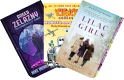
Eric Varden, a Trappist monk and a bishop, known to many as the author of this startling words “We are dust called to glory” (from his extraordinary earlier book The Shattering of Loneliness) has written a bold book with a deliberately provocative title: Chastity. This title could be misunderstood as referring to “a set of attitudes and code of behaviour associated with a past age”. In fact, however, the book reclaims the original meaning of the word “chaste” and shows how, with its millennia-long history behind it, it can serve as a pointer to a new orientation of our nature, “enacted through integral reconciliation, towards fullness of life”.
Chastity brings in an astonishing range and depth of references to literature, Scripture, music, painting, sculpture, and science, and it abounds with marvellous throw-away lines such as: “To be seen in truth is an intimate experience”, “predatory looking” [versus] “luminous seeing”, “theology in images”, “ubi amor ibi oculus” (“where love is, there will be an eye can truly see”), “humanity’s capacity for divinisation”, “a rhetoric of appeasement drenched in piety” [versus] “the voracious hunger of the human heart”, “the amnesia to which the West has succumbed regarding its Christian patrimony”, “an eternal reality unnarrowed by space and time”…
Chastity is a joy to read. It opens new vistas. It will blow your mind.
The word 'chastity', at first sight, may seem intimidating, something to be dismissed out of hand. It is, however, something very different to celibacy.
At a time when religion is in decline in the Western world and when it often seems that the senses have run riot, Erik Varden shows that chastity, the single minded direction of the senses, is a loveable quality and one that affects and beautifies humankind.
The terms sexuality and wholeness indicate that to be sexual is to exist in a state of incompleteness longing to be restored. Wholeness points to a healing embrace that we…
This book made me feel proud to be a member of the human race. At a time when cyborgs and artificial intelligence are increasingly extolled as superior to humans and when we hear more and more of projects to “enhance humans” and “transcend humans”, it is good to see what it can mean to be simply human and to what height the human spirit can rise.
Erik Varden writes in his book Towards Dawn: Essays in Hopefulness (2025): “The narrative of ‘transhumanism’ no longer pertains to Orwellian hyperbole. It is put before us as the inevitable next step of progress, which some predict will see human beings outdone by the machines.” But look at the life of Lusseyran.
Jacques Lusseyran lost his sight in a school accident when he was eight years old—and then he built a world which I would have found unimaginable before I read this book. First an interior world, and then—when he was barely sixteen—an external world too, as the initiator and spiritus movens of French Resistance during World War II. I would not have believed that this was possible. This is not a “transcended humanity” of science fiction, it is the “magnificent humanity” of Pope Leo’s 2026 encyclical “Magnifica Humanitas”.
Let me close by quoting the final paragraph of the “Epilogue”, about the two truths, which, Lusseyran says, were “intimately known to him”. The first truth is that “joy does not come from outside but whatever happens to us is within”. The second truth is that “light does not come to us from without. Light is in us, even if we have no eyes”. (p.241)
Can we continue to embrace life, even through the hardest times? Jacques Lusseyran, a French underground resistance leader during the Second World War, is one of those rare, inspirational people whose joy for life endures more than the story of everything he overcame.
Jacques lost his sight in an accident when he was eight years old. At sixteen, he formed a resistance group in Nazi-occupied France, using his heightened senses to select the best recruits.
Eventually Jacques was arrested and sent to Buchenwald concentration camp. After a fifteen-month incarceration, Jacques was one of thirty to survive from an initial transport…
This book is the life story of a Japanese medical doctor, a survivor of the atomic bomb, and a convert to Christianity, and it is a gripping story. Takashi Nagai is the author of several books, including the acclaimed The Bells of Nagasaki, which, in the words of famous Japanese novelist Shusaku Endo, “evoked an extraordinarily deep response in the hearts of Japanese people” (Foreword to A Song for Nagasaki).
When the atomic bomb was dropped at Nagasaki on August 9, 1945, tens of thousands of people were killed instantaneously, among them Midori, the beloved wife of the book’s hero. Dr Takashi Nagai, a pioneer in radiology research and a Catholic convert, survived. Deeply affected by over-exposure to radiation, he lived out the remaining years of his life by bringing physical and spiritual healing to others. He died of leukemia. As Shusaku Endo says in his Foreword, “The citizens of Nagasaki came to venerate the bedridden doctor as a saint. Their veneration of the man continues to this day (…). Christians and non-Christians alike were deeply moved by Nagai’s faith in Christ that made him like Job in the Scriptures: in the midst of the nuclear wilderness he kept his heart in tranquillity and peace, neither bearing resentment against any man nor cursing God.”
The dying words of this former Shintoist and determined atheist to those around him were “Inotte kudasai” (“Pray, please pray”). This “please” (“kudasai”) sounds quaint in English, and I find it moving. To me, a Pole and a Catholic, it is also moving to learn that a strong influence in Dr Takashi’s life was the Polish Franciscan Maximilian Kolbe, who came to Nagasaki in 1930 and founded a monastery there, and who was later murdered in Auschwitz; and that ultimately Takashi Nagai was converted to Catholicism by a fellow scientist, Blaise Pascal, the inventor of the syringe and the barometer, whose Pensées young Takashi first encountered as a high school student, read as a medical student, and then kept re-reading, all his life. I can relate to that, and it strikes a deep chord with me. I couldn’t put this book down.
On August 9, 1945, an American B-29 dropped an atomic bomb on Nagasaki, Japan, killing tens of thousands of people in the blink of an eye, while fatally injuring and poisoning thousands more. Among the survivors was Takashi Nagai, a pioneer in radiology research and a convert to the Catholic Faith. Living in the rubble of the ruined city and suffering from leukemia caused by over-exposure to radiation, Nagai lived out the remainder of his remarkable life by bringing physical and spiritual healing to his war-weary people.
A Song for Nagasaki tells the moving story of this extraordinary man, beginning…
What is my book about? This book offers an unpacked version of the Nicene Creed, a definitive statement of belief of mainstream Christianity and a unique document in human history – “the world’s one unchanging creed” (Georgiana Fullerton). The book seeks to clarify this compressed text through “Basic Human” – the conceptual language of all people discovered by the author and colleagues through decades of wide-ranging crosslinguistic investigations. At a time of post-Christian spiritual disorientation, when many are seeking the threads of meaning to hold things together, the vision of the Nicene Creed can offer a new reference point and a beacon of hope. By articulating this vision in Basic Human, in simple words found in all languages, this book makes it clearer and more accessible than ever before.




 Apple Books


