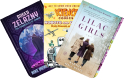
The Wild Cards anthology series is an intricate and interconnected set of superhero short stories all set together in a shared universe. It is edited by George R. R. Martin, with various stories written by the master himself and his various friends and colleagues. The corpus is vast with 34 published volumes! This year I read the first six. Wild Cards reimagines the superhero genre as an alternate-history saga in which extraordinary powers have profound consequences. The series reimagines the superhero genre from an adult perspective, exploring themes of identity, prejudice, politics, trauma, celebrity, morality and power.
Back in print after a decade, expanded with new original material, this is the first volume of George R. R. Martin's Wild cards shared-world series
There is a secret history of the world—a history in which an alien virus struck the Earth in the aftermath of World War II, endowing a handful of survivors with extraordinary powers. Some were called Aces—those with superhuman mental and physical abilities. Others were termed Jokers—cursed with bizarre mental or physical disabilities. Some turned their talents to the service of humanity. Others used their powers for evil.…
Jason Pargin’s short insightful and entertaining videos began appearing in my social media feed this year, only later in this year did I come to realize he was a fiction author as well as an online personality. And so I read his break-out novel John Dies at the End, and I was not disappointed! It is a wild combination of horror, surreal comedy, and existential dread, but beneath the absurdity is a thoughtful exploration of friendship, fear, mortality, and the terrifying possibility that reality itself may not be what we think it is. John Dies at the End is a book that can make you laugh at something disgusting one moment and then leave you contemplating the nature of existence the next.
It's a drug that promises an out-of-body experience with each hit. On the street they call it Soy Sauce, and users drift across time and dimensions. But some who come back are no longer human. Suddenly, a silent otherworldly invasion is underway, and mankind needs a hero. What it gets instead is John and David, a pair of college dropouts who can barely hold down jobs. Can these two stop the oncoming horror in time to save humanity? No. No, they can't. "John Dies at the End" has been described as a 'Horrortacular', an epic of 'spectacular' horror that combines…
I re-read the first six books of Frank Herbert’s Dune series this year. I only last read them forty years ago as a teenager. I remember much from the movies and the various mini-series, but had forgotten how these six books are epic masterpieces in and of themselves. They present a much richer and more detailed universe than I ever remembered, or was able to absorb back in my teen years. Herbert’s epic is a philosophical treatise on the nature of political power and a speculative treatise on the nature of humanity’s future. (The first six books are: Dune (1965), Dune Messiah (1969), Children of Dune (1976), God Emperor of Dune (1981), Heretics of Dune (1984) and Chapterhouse: Dune (1985))
Before The Matrix, before Star Wars, before Ender's Game and Neuromancer, there was Dune: winner of the prestigious Hugo and Nebula awards, and widely considered one of the greatest science fiction novels ever written.
Melange, or 'spice', is the most valuable - and rarest - element in the universe; a drug that does everything from increasing a person's lifespan to making interstellar travel possible. And it can only be found on a single planet: the inhospitable desert world of Arrakis.
Whoever controls Arrakis controls the spice. And whoever controls the spice controls the universe.
The magic of Christmas meets magical realism in this modern remix of Jewish, New Testament, and Santa stories, all retold together in an urban psychiatric hospital.
On the streets, Josh is a visionary who hears the voice of God, but on locked ward 5C4, he is just one more homeless patient with auditory hallucinations.
On his tenth involuntary admission, Josh confronts fellow patient Nick, a jolly toy executive in red pajamas.
It’s Jesus versus Santa!
Or is it?
The two agree on an alliance and plan a daring escape from the unit.
Are they becoming more psychotic by refusing their medications?
Or more magical as the real Jesus and Santa emerge?
December on 5C4 is a compelling exploration of belief, identity, prayer and wonder, and of the blessings that come from the most unexpected of friendships.
Pick up your copy today and experience this holiday miracle for yourself!
●●●
Somerset Award for Literary & Contemporary Fiction (2026)