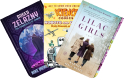
As an author in the same genre, I always admire writers who can bring history to life through personal stories integrated in the political context, without losing accuracy for the sake of dramatic effect. David Stafford masters this style in many books, not least in this one, which relates the experiences of a range of men and women during the immediate postwar period. Along the way, he raises several moral issues that others may swept under the carpet, including non-German presuppositions about atrocities and the German denial culture.
To end a history of World War II at VE Day is to leave the tale half told. Endgame 1945 highlights the gripping personal stories of nine men and women, ranging from soldiers to POWs to war correspondents, who witnessed firsthand the Allied struggle to finish the terrible game at last.
Endgame 1945 highlights the gripping personal stories of nine men and women, ranging from soldiers to POWs to war correspondents, who witnessed firsthand the Allied struggle to finish the terrible game at last.
Through their ground-level movements, Stafford traces the elaborate web of events that led to the war's…
This is an unusual choice of favourite for me, but William Inboden's viewpoint in 'The Peacemaker' is an unusual take on what was seen in the 1990s as the end of the Cold War. Inboden argues that Ronald Reagan was the primary actor in bringing about the collapse of the Soviet Union. There are many counter-arguments from other historians, especially when the history is viewed from a non-American standpoint. So calling Reagan a peacemaker may seem a contradiction and is perhaps deliberately provocative. But Inboden argues his case effectively in a well-researched and always engaging narrative. Definitely worth reading.
One of the Wall Street Journal’sbest political books of 2022
A masterful account of how Ronald Reagan and his national security team confronted the Soviets, reduced the nuclear threat, won the Cold War, and supported the spread of freedom around the world.
“Remarkable… a great read.”—Robert Gates • “Mesmerizing… hard to put down.”—Paul Kennedy • “Full of fresh information… will shape all future studies of the role the United States played in ending the Cold War.”—John Lewis Gaddis • “A major contribution to our understanding of the Reagan presidency and the twilight of the Cold War era.”—David Kennedy
Philip Yancey is probably my favourite Christian author of today (C S Lewis comes higher, but is of course from an earlier generation). The style in his other books is always thought-provoking and inspiring, but this autobiography goes deeper. With disarming honesty, it covers his childhood and upbringing in a poor and dysfunctional family in Georgia, laying the foundation for his (earlier) books that focus on suffering and grace. By turns moving and shocking, the story is honestly and graphically told, covering racism, fundamentalist Christianity and familial disharmony. And his choice of words and phrases always delights.
'Not until college days do I discover the shocking secret of my father's death.'
With a journalist's background Philip Yancey is widely admired for taking on the more difficult and confusing aspects of faith. Now in Where the Light Fell he shares, for the first time, the painful details of his own origins - taking us on an evocative journey from the backwoods and Bible-belt pockets of the South to the bustling streets of Philadelphia; from trailer parks to church parking lots; from dark secrets and family oddballs to fire-and-brimstone preachers and interminable church services. Raised by their impoverished single…
'Captain Charles Kennedy' parachuted into a moonlit Austrian forest and searched frantically for his lost radio set. His real name was Leo Hillman and he was a Jewish refugee from Vienna. He was going home. Men and women of Churchill’s secret Special Operations Executive worked to free Austria from Hitler's grip. Many were themselves Austrians who had fled Nazi persecution. Trained and equipped by SOE, they courageously returned to their homeland. Some died in the attempt. Their moving stories are part of the history of how Austria recovered her sovereignty. 'An enthralling tale from a lesser-known part of real Second World War history. ... At its heart, this is a human story brimming with emotion, triumph, heartache, and tragedy. 5-star Readers' Favorite review. 'An extraordinary and compelling account of the little-known operations of SOE and Austria in World War Two. Peter Dixon shines a light on the bravery of the agents, in a narrative told with colour and vivacity, yet great sensitivity and meticulous research', Dr Helen Fry, author of Spymaster.