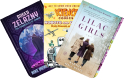
I liked that this book combined an exciting fictional premise (first contact with aliens) with practical tips for negotiation strategy. The author is Deepak Malhotra, a professor whose focus is on negotiation, deal-making, and conflict resolution.
This was one of maybe two novels I read this year, as I’ve mainly been reading non-fiction related to political polarization and conflict resolution.
In my book, one thing I wrote was that I hoped that more writers and artists would see it as valuable to create depolarization-aimed works (novels, movies, TV shows). The Peacekeeper’s Code was inspiring to me, as it reminded me that one can create compelling and entertaining storylines that contain important educational concepts.
WINNER OF THE 2021 "NATIONAL INDIE EXCELLENCE AWARD" FOR BEST SCIENCE FICTION
Professor Kilmer, a renowned historian of war and diplomacy, is collected from his home and whisked off to Washington. Thrust into the highest levels of government as an adviser to the President, the young historian must come to terms with the seemingly impossible, figure out how to navigate a world where not everything is as it appears, and use all the skills and knowledge he has acquired in his life to help save humanity from a conflict of truly epic proportions. A genre-breaking novel that re-examines the human…
I learned of this book reading The Peacemaker’s Code: Malhotra’s novel includes some of the peacekeeping concepts from The Causes of War.
Blainey’s main idea is that a major factor in war is a country being very optimistic about their chances of winning a war. And the problem there is that people often have distorted, overly optimistic ideas about their own abilities. They may not understand how much pain they and the people they care about might really be in for. Optimism can be deadly.
Blainey’s book is also great for learning about world history. And Blainey is frequently very funny: if every history book was this entertaining, you’d have a lot more people into history.
The third edition of Geoffery Blainey’s highly acclaimed study on the causes of war has been expanded and updated to include a complete discussion of World War II and the road towards nuclear war.
Analyzing all international wars since 1700, Causes of War solves the riddle of why some wars are long and some are short and demonstrates how the “outbreak of peace” offers insight into the outbreak of war.
Proving that war and peace are alternating phases of a relationship between rival nations, this widely quoted work offers a crucial, new understanding of international armed conflict.
I’ve read a lot of books about American political polarization and I think this is one of the best.
Taylor focuses on our tendency to believe we’re in possession of “the truth” (something I’ve long believed is humanity’s main problem). He examines how that tendency leads to people speaking in insulting, condescending ways about their political opponents, and how this amplifies our divides.
Taylor focuses on the certainty here, which I see as part of the broader cycle of conflict: as two groups become polarized, they’re increasingly drawn to simplistic, us-vs-them framings of the people and issues around them. The existential anxiety the conflict creates in them can in turn create a need for more certainty (something I touch on in my book).
Why our obsession with truth--the idea that some undeniable truth will make politics unnecessary--is driving our political polarization.
In The Divide, Taylor Dotson argues provocatively that what drives political polarization is not our disregard for facts in a post-truth era, but rather our obsession with truth. The idea that some undeniable truth will make politics unnecessary, Dotson says, is damaging democracy. We think that appealing to facts, or common sense, or nature, or the market will resolve political disputes. We view our opponents as ignorant, corrupt, or brainwashed. Dotson argues that we don't need to agree with everyone, or force…
In my book Defusing American Anger, I try to explain to everyday Americans how polarization dynamics work, why they should see polarization as a huge problem, and why they should want to work on reducing it. (And it’s currently available only in ebook; I’m still editing it for a print version.)
Almost all the books I’ve read over the past 3 years have been related to political polarization and conflict, and the books in this list you’ll notice are related to that theme, too.