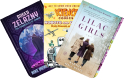
I tend to read more books about comedy than I do books by comedians. Bamford’s book was a welcome shift for me and provided unique insights into the mechanics of unconventional comedy. She has been revered by comedy nerds for a long time but I was only moderately familiar with her work, mostly in that she is at the forefront of a certain kind of confessional, discomforting comedy that sometimes focuses on her mental health, a topic that was, until recently, off limits in the mainstream comedy world.
Acclimating to the substance and tone comes relatively quickly. The juxtaposition of difficult personal revelations alongside breezy comedic reflection created a unique and revelatory reading experience.
From "weird, scary, ingenious" (The New York Times) stand-up comedian Maria Bamford, a brutally honest and hilariously frenetic memoir about show business, mental health, and the comfort of rigid belief systems-from Dale Carnegie's How to Win Friends and Influence People, to Suzuki violin training, to Richard Simmons, to 12-step programs.
Maria Bamford is a comedian's comedian (an outsider among outsiders) and has forever fought to find a place to belong. From struggling with an eating disorder as a child of the 1980s, to navigating a career in the arts (and medical debt and psychiatric institutionalization), she has tried just about…
There will never be another Jon Stewart because we are all Jon Stewart now.
I’m paraphrasing (and maybe overstating) one of the insights from Comedy Book, which explores comedy’s growing presence in today’s cultural and political discourse. The book also presents an accessible but nuanced discussion of comedy’s contested guardrails and protocols: What does it mean to punch up/down? What is “the line” and when is it ok to cross it? How important is context and intent?
The democratization of communication on the internet has been wonderful. And awful. Comedy is a part of both sides of that story. Comedy Book is for those who wish to better understand it.
Named a Most Anticipated Book by Vulture, Elle, Chicago Tribune, The Millions, and Lit Hub
"Comedy Book changes the way we talk about an art form that is more diverse and exciting than ever before." -Seth Meyers "A sharp, loving, well written exploration and analysis of the art form that makes us smile, helps us relate, and is perpetually mysterious." -Jenny Slate
From a beloved comedy critic, a wisecracking, heartfelt, and overdue chronicle of comedy's boom-and its magic.
Comedy is king. From multimillion-dollar TV specials to sold-out stand-up shows and TikTok stardom, comedy has never been more popular, democratized, or…
Satire holds truth to power, provides levity during hard times, encourages political engagement, and creates a shared narrative in a world that seems like it’s circling the stupidest drain in the stupidest house in stupidtown.
Using existing satire scholarship, these and other arguments are presented in the context of the Trump era (2015 – who knows) in a dispassionate but unapologetically partisan manner. The conclusion is that political satire was a net benefit, even during moments that defied the laws of absurdity.
I found these arguments compelling but would have liked more discussion of the troll paradox – a term I just made up. The paradox: even if political satire unifies and supports resistance to malfeasance and hypocrisy, during the Trump era it also seemed to bring the targets of that satire immense joy. Sequel?
* Trump Was a Joke offers the best, most-comprehensive guide yet to the power of political satire in shaping public opinion during turbulent political times. This exploration in satire and trump includes a foreword by American documentary filmmaker, author, and left-wing activist Michael Moore.
* Would be recommended reading in for any undergraduate or master's level students studying communications, comedy studies, media studies, political science, rhetoric, and American studies (particularly in the US)
* The closest competitors have studied the connection between satire and politics, but so far none have focused on how political comedy has taken on…
Award-winning novelist and cultural critic Strobe Witherspoon interrogates his own profession. It goes terribly. OOF explores the role of satire in a society lurching from one ridiculous crisis to the next, where media outlets rely on clicks to stay alive and everything is filtered through a lens of anger and misinformation.