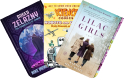
The bombshell revelation of Nelly Lahoud’s work is that Al-Qaeda lost its international reach after being evicted from Afghanistan in late 2001.
Reading her book The Bin Laden Papers makes it difficult not to conclude that the war on terrorism was largely misguided and that the American invasion of Iraq in 2003 gave new life to an international jihadi movement that was on the ropes—if not on the mat.
The contribution Dr. Lahoud’s work makes to understanding our enemy is invaluable, particularly if it helps prevent a future American overreaction that results in thousands of deaths and trillions of dollars misspent in pursuit of an enemy who has already been defeated.
An inside look at al-Qaeda from 9/11 to the death of its founder-told through the words of Bin Laden and his closest circle
As seen on 60 Minutes
"A comprehensive, meticulously constructed and eye-opening look at bin Laden as husband, father and leader-in-hiding. . . . An engaging and persuasive read."-Karen J. Greenberg, Washington Post
"Never less than gripping. . . . [Offers] an extraordinary insight into the inner workings of al-Qaeda, both before and after 9/11, and lays bare the terrorist organisation's closely guarded plans, ambitions and frustrations."-Saul David, Sunday Telegraph
Elliot Ackerman, who fought with enormous valor as a Marine platoon leader in the Battle of Fallujah, explores the meaning of his war in a way that profoundly resonates with all of us who served there.
Elliot is now co-chairing the effort to build a National Memorial to the Global War on Terror to honor the veterans who are struggling to understand what it all meant.
From a decorated Marine war veteran and National Book Award finalist, an astonishing reckoning with the nature of combat and the human cost of the wars in Iraq, Afghanistan, and Syria.
"War hath determined us..." - John Milton, Paradise Lost
Toward the beginning of Places and Names, Elliot Ackerman sits in a refugee camp in southern Turkey, across the table from a man named Abu Hassar, who fought for al-Qaeda in Iraq and whose connections to the Islamic State are murky. At first, Ackerman pretends to have been a journalist during the Iraq War, but after establishing a rapport with…
Paul Kennedy examines the role of naval power in the Second World War in a new and comprehensive way that has huge implications for the naval arms race between China and the United States and our allies—and not in a good way for America’s pacing challenge.
What I most love about Victory at Sea, however, is the pictures! Unusually for a book on strategic studies, this book on naval history is illustrated with two dozen pictures by the late great Ian Marshall; his paintings of the ships discussed in the book are more than worth the price of admission!
A sweeping, lavishly illustrated one-volume history of the rise of American naval power during World War II
"When he is at his best, as he often is in these pages, Kennedy can be dazzling."-Ian W. Toll, New York Times
"The book makes for enjoyable reading, owing to the author's easygoing style. . . . Kennedy is an academic who does not write like one; he writes a story, not a treatise."-Robert D. Kaplan, Washington Post
"Engrossing."-Brendan Simms, Wall Street Journal
In this engaging narrative, brought to life by marine artist Ian Marshall's beautiful full-color paintings, historian…
A Call to Action: Lessons from Ukraine for the Future Force
Fifty years ago, the US Army faced a strategic inflection point after a failed counterinsurgency effort in Vietnam. In response to lessons learned from the Yom Kippur War, the United States Army Training and Doctrine Command was created to reorient thinking and doctrine around the conventional Soviet threat. Today’s Army must embrace the Russo-Ukrainian conflict as an opportunity to reorient the force into one as forward-thinking and formidable as the Army that won Operation Desert Storm.
This article suggests changes the Army should make to enable success in multidomain large-scale combat operations at today’s strategic inflection point.