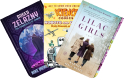
A historical narrative in the usual nonfiction manner, but also including many transcripts of interviews with the men who lived and made the history, and profusely illustrated. In general, the book charts the American hatting industry from the industrial revolution through the rise and fall of hats to the early 2000s. The stories told by the primary sources are fascinating, and the detail on different types of hats and the industry in general is really informative.
This was a brutish, primitive hatred, as characteristic of the horror of war in the Pacific as the palm trees and the islands...
Landing on the beach at Peleliu in 1944 as a twenty-year-old new recruit to the US Marines, Eugene Sledge can only try desperately to survive. At Peleliu and Okinawa - two of the fiercest and filthiest Pacific battles of WWII - he witnesses the dehumanising brutality displayed by both sides and the animal hatred that each soldier has for his enemy.
During temporary lapses in the fighting, conditions on…
This was a fascinating memoir from a unique perspective on World War II. The author is able to recall/reconstruct the action in great precision and detail to how he felt to who said what, turning his accounts of the battles into thrilling stories much of the time. The fact that Hara was able to see the reality of each situation and did not fall victim to the illusory fantasies of the Imperial Japanese high command makes his story all the more interesting. It's a very critical account, both of himself and his mistakes and those of the military around him, and it has given me a great deal of further insight into the IJN and its battles. There are maps of some of them, but the naval maneuvers are very complex and still hard to follow. It's the story of Japan's early victories and inevitable defeat from the eyes of a destroyer captain. Important battles such as Midway get glossed over because he played only a minor, circumferential role in it.
Japanese Destroyer Captain is a highly regarded war memoir that was a best seller in both Japan and the United States during the 1960s. The work has long been treasured by World War II buffs and professional historians for its insights into the Japanese side of the surface war in the Pacific. The book has been credited with correcting errors in U.S. accounts of various battles and with revealing details of high-level Imperial Japanese Navy strategy meetings.
The author, Captain Tameichi Hara, was a survivor of more than one hundred sorties against the Allies and was known throughout Japan as…
Tired of his mundane life going to school, playing video games, and generally accomplishing nothing worth mentioning, thirteen-year-old George decides to actually do something, something exciting and interesting, something real. When a recruiting sergeant for the Alamedan Empire comes to his school, he enlists in the Alamedan Army and goes to fight with other teenagers in the Paintball Wars.
George quickly discovers that this new life is not easy. From intense infantry battles to the deceitful peace between them, George is confronted with how much his fellow soldiers depend on him to do his part - and how far he has to go to fulfill his duty. And when his company finds itself in a pickle with no leadership, George must overcome his resistance to change and rise to the challenge.
The Paintball Wars is a fictional world set in the present day. Armies of tens of thousands of teenagers clash in epic World War II-style paintball battles, including tanks, artillery, and aircraft, to occupy each other's territory. Are you a history buff who loves World War II? Do you like to play paintball, but always wanted something grander? Do you enjoy the action and adrenaline of a gripping war story, but dislike the gory, brutal reality of war? Then the Paintball Wars Chronicles are for you!