Shakespeare comes across as a modest but wealthy man, a hard worker who wrote and re-wrote extensively, who had a dysfunctional marriage (he lived apart from Anne for most of their marriage), who amassed a modest fortune in his artistic activities to afford the grandest house in Stratford. He lifted his plots from other works, primarily that of Plutarch, and through the many bookshops he visited. He cared less for plot and historical accuracy and more for the exploration and creation of words – he is reputed to have used 18,000 unique words in his career. He also perfected the art of the soliloquy (“To be or not to be…”) as a response to the personal essay form that was gaining traction in his day.
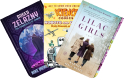
What accounts for Shakespeare’s transformation from talented poet and playwright to one of the greatest writers who ever lived? In this gripping account, James Shapiro sets out to answer this question, "succeed[ing] where others have fallen short." (Boston Globe)
1599 was an epochal year for Shakespeare and England. During that year, Shakespeare wrote four of his most famous plays: Henry the Fifth, Julius Caesar, As You Like It, and, most remarkably, Hamlet; Elizabethans sent off an army to crush an Irish rebellion, weathered an Armada threat from Spain, gambled on a fledgling East India Company, and waited to see who…
It’s a rip-roaring yarn, based on true events, and Cornwell has done great service in bringing the Siege of Seringapatam in India to life in as vivid a fashion through the mercurial but honest character of private Richard Sharpe, who takes on the last Indian ruler to challenge the British East India Company, Tipoo Sultan.
*The brand new novel, SHARPE'S ASSASSIN, is available to pre-order now*
Sharpe's Tiger is the brilliant beginning of Sharpe's adventures
India, 1799
The citadel of Seringapatam is under siege. Navigating this dangerous kingdom of bejewelled palaces and poverty, Private Richard Sharpe embarks on a rescue mission to save a senior officer from the clutches of the Tippoo of Mysore - and oust the Sultan from his throne.
The fortress of Mysore is considered impregnable, but one of the greatest threats comes from betrayal within the British ranks. And the man to outwit enemies from both sides is…
I’ve always maintained that Rushdie is a better essayist than a novelist, and this book confirms my thinking.
He laments that readers crave more realism today, more “lived-experience,” even in fiction. Gone is the ability to let the imagination soar into the magical worlds of Haroun and Luca. “How autobiographical is it?” is a question he gets asked frequently. Thus, Roberto Bolano has usurped Gabriel Garcia Marquez with his auto-fiction novels. Yet, Rushdie admits that his most successful novel is Midnight’s Children, which is autobiographical, while his other autobiographical novel, Fury, bombed.
This is a great collection, loaded with anecdotes, with frequent barbs aimed at those custodians who seek to muzzle artists in the name of religious and political correctness and who consider themselves gatekeepers to the truth.
Newly collected, revised, and expanded nonfiction from the first two decades of the twenty-first century—including many texts never previously in print—by the Booker Prize–winning, internationally bestselling author
Longlisted for the PEN/Diamonstein-Spielvogel Award for the Art of the Essay
Salman Rushdie is celebrated as “a master of perpetual storytelling” (The New Yorker), illuminating truths about our society and culture through his gorgeous, often searing prose. Now, in his latest collection of nonfiction, he brings together insightful and inspiring essays, criticism, and speeches that focus on his relationship with the written word and solidify his place as one of the most original…
With Chatbots and Large Language Models changing the world of writing and publishing dramatically, what happens when we introduce a sentient robot capable of feelings into the mix?
Phil Kruger, inventor and serial womanizer, believes he has the answer in his creation, Victoria, the first sentient robot in the world, imbued with beauty, knowledge, and strength, and on a crash course to acquire human feelings through massive infusions of data. Arrayed against him are independent trade publisher, Artemius (Art) Jones and his rebellious and sexually starved daughter, Paula, an editor herself, who is determined to take her father’s failing press, Crimson Literary, into the indie world of self-publishing. The rest of the cast is made up of Sebastian Smyth, AI consultant and robotic lover; Kevin Bartolo, revolutionary poet and passionate lover of women and traditional publishing; Diana Dawson, Art’s ex-wife who dumped him for the younger Phil; Kamala Shah, the charismatic but calculating heir to the throne of Hind Robotics, the company bankrolling Phil’s AI venture; Viresh Shah, chairman of Hind Robotics, thirsting for South Asia to grab the pole position in AI technology.
The worlds of publishing and AI clash, leading to some funny, saucy, and scary situations, leaving us with the existential question of how will we share this planet with our digital creations.