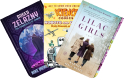
This is a horrible book, and a beautiful book. It tells the stories of women who fought in war, who insísted to join their brothers, husbands, and sons, voluntarily, even if that meant they had to leave their children, and their chance of safety. The author collected hundreds of interviews to understand why these women wanted to fight, and how their female perspective - a story untold, but now again so very relevant if we look at all the Ukranian women going into war - gave a different perspective of what it means to fight, and to kill. I cried more than once, but I'm glad I read this book: it's an important one.
'It would be hard to find a book that feels more important or original' - Viv Groskop, Observer
Extraordinary stories from Soviet women who fought in the Second World War - from the winner of the Nobel Prize in Literature
"Why, having stood up for and held their own place in a once absolutely male world, have women not stood up for their history? Their words and feelings? A whole world is hidden from us. Their war remains unknown... I want to write the history of that war. A women's history."
Beautiful, raw, and as honest about different types of addiction as you can get. With Liz Gilberts' typical soft, humorous, cut-through-the-crap voice.
"A delicious mashup of narrative that's by turns harrowing and healing." –People
“Entertaining, insightful, wrenching ... punch-to-the-gut powerful.” –The Washington Post
“A blockbuster: brutally honest, lurid, transcendent, and compelling...Gilbert is undoubtedly a force.” —Boston Globe
In her first nonfiction book in a decade, the #1 bestselling writer who taught millions of readers to live authentically (Eat Pray Love) and creatively (Big Magic) shows how to break free.
In 2000, Elizabeth Gilbert met Rayya. They became friends, then best friends, then inseparable. When tragedy entered their lives, the truth was finally…
*From the Booker-shortlisted author of Small Things Like These*
Faber Stories, a landmark series of individual volumes, presents masters of the short story form at work in a range of genres and styles.
The evening is fine. In the sky a few early stars are shining of their own accord. She watches the dog licking the bowl clean. This dog will break her daughter's heart, she's sure of it.
Claire Keegan's mesmeric story takes us into the heart of the Wicklow countryside, and of the farming family of Victor Deegan, with his 'three teenagers, the milking and the mortgage'.
Combining the ethical clarity of Jonathan Safran Foer’s Eating Animals with the disquieting vision of Alan Weissman’s bestseller The World Without Us, a thought-provoking, entertaining exploration of a future where animal consumption is a thing of the past.
Though increasing numbers of people know that eating meat is detrimental to our planet’s health, many still can’t be convinced to give up eating meat. But how can we change behavior when common arguments and information aren’t working?
Acclaimed anthropologist Roanne Van Voorst changes the dialogue. In Once Upon a Time We Ate Animals, she shifts the focus from the present looking forward to the future looking back—imagining a world in which most no longer use animals for food, clothing, or other items. By shifting the viewpoint, she offers a clear and compelling vision of what it means to live in a world without meat.
A massive shift is already taking place—everything van Voorst covers in this book has already been invented and is being used today by individuals and small organizations worldwide.
Hopeful and persuasive, Once Upon a Time We Ate Animals offers a tantalizing vision of what is not only possible but perhaps inevitable.