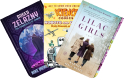
This book is a triumph, not just as an accessible history of the Renaissance but a look at how our understanding of history is constructed. It interweaves learnings from multiple disciplines—political science, history, art, economics, archaeology, and so on, and also LARP and fishtank maintenance—to paint a brilliant and multifaceted portrait of the people, ideologies, and movements that built the Renaissance, and explains why the beginning, end, and significance of the era is so difficult to pin down.
It's also really emotional in a way that deserves celebration. Rarely does any nonfiction work make me openly weep and this did in multiple places. It's the work of an author who loves her subject. I also love her subject but this somehow made me even more excited and invested in the Renaissance than I already was.
The Renaissance is one of the most studied and celebrated eras of history. Spanning the end of the Middle Ages to the beginning of modernity, it has come to symbolise the transformative rebirth of knowledge, art, culture and political thought in Europe. And for the last two hundred years, historians have struggled to describe what makes this famous golden age unique.
In Inventing the Renaissance, acclaimed historian Ada Palmer provides a fresh perspective on what makes this epoch so captivating. Her witty and irreverent journey through the fantasies historians have constructed about the period show how its legend derives more…
Just stop whatever you're doing and read this, okay?
Especially if you're in the West. Especially if you think you're basically a good person, muddling through. Especially if you've been afraid to talk about Gaza because of what people might think about you. I especially challenge liberal Zionists to read it. But everyone. Read it. I wish I could put it on 24/7 audiobook and play it for everyone in any kind of leadership position, anyone who can do anything, no matter how small. Read it.
NEW YORK TIMES BESTSELLER • LONGLISTED FOR THE NATIONAL BOOK AWARD • SHORTLISTED FOR THE 2025 PALESTINE BOOK AWARDS • From award-winning novelist and journalist Omar El Akkad comes a powerful reckoning with what it means to live in a West that betrays its fundamental values.
"[A] bracing memoir and manifesto." —The New York Times
"I can't think of a more important piece of writing to read right now. I found hope here, and help, to face what the world is now, all that it isn't anymore. Please read this. I promise you won't regret it." —Tommy Orange,…
This could easily be, I don't know, heartwarming glurge about the importance of found family. Instead, it's a haunting and elegant story about art, revolution, and the damage it leaves behind. Griffon, a teenage trans boy living in a post-apocalyptic, flooded New York, is adopted by an older t4t couple, Etoine and Zaffre, who are artists and refugees from a city called Stephensport, which is frozen in time. In their youth, they were part of a revolutionary movement that left them with both physical and mental scars, and it's only after their deaths that Griffon reads through Etoine's journal and learns what happened.
I doubt Fellman set out to write something so perfectly tailored to my tastes but he sure did.
When your parents die, you find out who they really were.
Griffon Keming's second parents saved him from his abusive family. They taught him how to be trans, paid for his transition, and tried to love him as best they could. But Griffon's new parents had troubles of their own - both were deeply scarred by the lives they lived before Griffon, the struggles they faced to become themselves, and the failed revolution that drove them from their homeland. When they died, they left an unfillable hole in his heart.
Griffon's best clue to his parents' lives is in his…
What use is a revolution in a world ruled by magic?
A young wizard on the brink of burnout searches for her lost mentor. A bereaved mother, summoned to the sea by an ancient god, risks all to avenge her child. Her ex-husband smuggles weapons to a rag-tag resistance. The Cascade ruined the world that was; the Blight nearly destroyed what remained. The magical catastrophe unleashed demons and shriekgrass, an endless winter, and a promise of worse to come.
In what remains of Canada, the genocidal Dominion government rules with an iron fist, while the libertarian Silicon Valley Autonomous Region chips away at the country's sinking west coast. Can a restive coalition of revolutionaries, defectors, and magicians pick up the pieces?