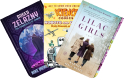
It's about birding and history and local politics and academia and enivronmental justice and social justice and Hurricane Katrina and so many other things, all bound together by the author's autobiographical narrative. Very informative and inspirational.
In this uplifting memoir, a professor and activist shares what birds can teach us about life, social change, and protecting the environment.
Trish O'Kane never expected to be a birder. She was a world-traveled journalist with no science background who surprised herself in her forties by falling in love with birds. Cut to seventeen years later, and O'Kane is a highly qualified ornithologist who teaches at the University of Vermont and is the creator of the hugely popular course Birding to Change the World, on which this book is based.
So much to learn here about how we think about biology, told through a dual biography of Linneaus and some forgotten dude who, it turns out, it way cooler than Linneaus and has a cooler name than Linneaus....Buffon!
An epic, extraordinary account of scientific rivalry and obsession in the quest to survey all of life on Earth—a competition “with continued repercussions for Western views of race. [This] vivid double biography is a passionate corrective” (The New York Times Book Review, Editors’ Choice).
“[A] vibrant scientific saga . . . at once important, outrageous, enlightening, entertaining, enduring, and still evolving.”—Dava Sobel, author of Longitude
In the eighteenth century, two men—exact contemporaries and polar opposites—dedicated their lives to the same daunting task: identifying and describing all life on Earth. Carl Linnaeus, a pious Swedish doctor with a huckster’s flair, believed…
Cautionary tale of what is happening in the world of politics and the media all over the world. Sobering to see how the far right has become so unhinged from Western values (even as they proclaim to be the defenders of Western values....).
A FINANCIAL TIMES, ECONOMIST AND NEW STATESMAN BOOK OF THE YEAR 2020
'The most important non-fiction book of the year' David Hare
In the years just before and after the fall of the Berlin Wall, people from across the political spectrum in Europe and America celebrated a great achievement, felt a common purpose and, very often, forged personal friendships. Yet over the following decades the euphoria evaporated, the common purpose and centre ground gradually disappeared, extremism rose once more and eventually - as this book compellingly relates - the relationships soured too.
Anne Applebaum traces this history in an unfamiliar…
A core tenet of the Soviet Communist Party's ideology was the belief that religion was an oppressive tool, wielded by the exploiting classes. With help of the secret police, they attempted to eliminate it completely from Soviet society by, in part, imprisoning believers and attempting to "re-educate" them in the labor camps of the infamous Gulag. However, the aims of the Gulag were conflicted, and anti-religious activities were rarely prioritized. In their absence, religious practices became important to inmates and played integral roles in their lives. Imprisoned Christians found ways to pray, read scripture, sing hymns, celebrate Easter, and commune with their fellow believers.
Finding God in the Gulag tells the story of how these inmates saw their suffering as part of God's will or as a sign of the coming Apocalypse. The struggle between good and evil felt real to many, although for some, the dire struggle to survive the brutalizing world of Soviet labor camps prompted doubt, despair, and ultimately the abandonment of their beliefs. Many were also converted in the camps through the proselytizing efforts of fellow prisoners, finding in Christianity a source of hope, comfort, and community.
This tension between atheism, faith, repression, doubt, and conversion endured throughout the Soviet Union's existence. Remarkably, in the last years of Soviet power, Christianity flourished in the remnants of the Gulag system and was even used by guards as a method of re-educating their inmates.