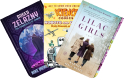
“ChatGPT for Java” is a great way to learn about using ChatGPT in general and accessing Java APIs. It's a relatively short book (225 pages), but the pages are narrower than your traditional tech book. This is great for carrying the book around with you. It's not so great for reading code or looking at tables. I felt like there was a lot of wasted space in the tables and the description column would be 4-5 words long. There was also 2.5 pages of a bulleted list that I was wondering why it wasn't two columns. None of this takes away from the content of course.
Early on the book explains how prompts work with a great example. The author compares to regular expressions. I do have to comment re page 6's “I'm thoroughly convinced that every programmer somewhere in their lifetime has met *some guy* who happens to be an expert in writing regular expressions. That's me! Minus the guy part. I did enjoy why LLM and regular expressions are different.
Embrace the future of software development! ChatGPT for Java is the perfect starting point for Java developers to learn how to build intelligent applications using ChatGPT and Open AI APIs.
This book takes you from the ground up to demonstrate how to use ChatGPT programmatically. You will learn the basics of ChatGPT and OpenAI APIs, including how to authenticate, send prompts, generate responses, test in the Playground, and handle errors. Each chapter includes practical exercises which demonstrate different API functionalities and bring your concepts to life. You will learn how to AI-enable your own applications using models such as GPT-4,…
Great book! The premise is that the world is inhospitable with an average temperature of -50F and highs of -17F. There are two domed cities that are better. One is SnowGlobe where almost everyone is on reality tv. The other is for retirees of SnowGlobe. Well some retirees. I say almost everyone as the directors of the reality shows and the ruling family are exempt from being on camera all the time.
Everyone dreams of being in SnowGlobe where it is a good temperature. They want to give up their privacy. Everyone in the world watches. There are stars. People stay in SnowGlobe as long as they are watchable. They all aspire to be stars as the best actor of the year gets a job as the "weather presenter" and stay in SnowGlobe forever.
The weather presenter job idea is cool. Since all weather is artificially it is generated with some degree of randomness. Not overly artificial so they don't get snow in the winter. But enough.
The main character is Chobahn who grows up in the "open world". She works in the power plant on a giant hamster wheel. Turns out she is a clone. As is the main star of SnowGlobe. I enjoyed seeing the world both inside and out. The buses and trains for transport were well explored. A lot of attention was paid to the cold. From what clothing to wear to how flu/cold are dead in the world but not in SnowGlobe.
There were definitely some things left unresolved. Hopefully for the second book. Like the portals and "death row" power generation. I'm looking forward to seeing how it turns out.
NEW YORK TIMES BESTSELLER • The groundbreaking Korean phenomenon that Entertainment Weekly called “The Hunger Games meets Squid Game”—now in English for the first time!
“An immersive and utterly addictive dark dystopian thriller . . . with the eerie, desperate, and exhilarating vibes of Snowpiercer and The Hunger Games.” —Susan Lee, author of Seoulmates
In a world of constant winter, only the citizens of the climate-controlled city of Snowglobe can escape the bitter cold—but this perfect society is hiding dark and dangerous secrets within its frozen heart.
**The gorgeous first edition hardcover of Snowglobe features two covers in one (a…
This was a long book at 600 pages, but I was engaged through. I like that the chapters varied between the human and spider point of view. I liked the spider chapters better; more original. It was cool seeing how they evolved and their civilization progressed. The idea of using ants for workers and processing is interesting. As is the biological starfaring tech. It is well explained.
I liked the reuse of spider names o we don't have to keep learning new ones. And the idea of Understanding being inherited and later ingestible. The gender issue is dealt with effectively from the point of view of an insect.
I also liked the human/AI angle. The war between humans and spiders showed he difference in philosophy well. The last chapters felt like a great epilogue. Then I learned this is a trilogy and that was set up for the next one. I think this book is both a self contained story and the beginning of a trilogy.
Winner of the 30th anniversary Arthur C. Clarke Award for Best Novel
Adrian Tchaikovksy's critically acclaimed, stand-alone novel Children of Time, is the epic story of humanity's battle for survival on a terraformed planet.
Who will inherit this new Earth?
The last remnants of the human race left a dying Earth, desperate to find a new home among the stars. Following in the footsteps of their ancestors, they discover the greatest treasure of the past age - a world terraformed and prepared for human life.
But all is not right in this new Eden. In the long years since the…