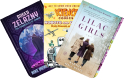
Ian Toll’s trilogy on the Pacific War is my first favorite trilogy for this year. The first volume (Pacific Crucible) came out in 2012; the second (The Conquering Tide) in 2015; and the final volume (Twilight of the Gods), which is the one I am recommending here, in 2020.
Collectively the nearly 2,400 pages chronicle the Pacific War not only in detail but in prose that is both commanding and lyrical, characteristics that are especially evident in the final volume.
In June 1944, the United States launched a crushing assault on the Japanese navy in the Battle of the Philippine Sea. The capture of the Mariana Islands and the accompanying ruin of Japanese carrier airpower marked a pivotal moment in the Pacific War. No tactical masterstroke or blunder could reverse the increasingly lopsided balance of power between the two combatants. The War in the Pacific had entered its endgame.
Beginning with the Honolulu Conference, when President Franklin Delano Roosevelt met with his Pacific theater commanders to plan the last phase of the campaign against Japan, Twilight of the Gods…
Though America’s War against Japan is generally considered a naval war, the role of the U.S. Army in the conflict is often overlooked. Not anymore.
McManus brings the role of the Army fully to center stage and, like Toll, he does so with a lively and accessible prose that keeps the reader turning pages. The third and final volume of this trilogy is To the End of the Earth, which came out in 2023. Though all three volumes are worth your time, the final volume completes the story satisfactorily.
Winner of the Army Historical Foundation Award for Excellence in U.S. Army Writing
From the liberation of the Philippines to the Japanese surrender, the final volume of John C. McManus's trilogy on the US Army in the Pacific War
“Brilliant [and] riveting... a truly great book.”—Gen. David Petraeus • “Triumphant [and] compelling.”—Richard Frank • “McManus is one of the best—if not the best—World War II historians working today.”—World War II magazine
The dawn of 1945 finds a US Army at its peak in the Pacific. Allied victory over Japan is all but assured. The only question is how many more…
My third favorite trilogy for this year also concerns World War II and the U.S. Army, but it focuses on the European theater.
This is Rick Atkinson’s Liberation Trilogy which appeared between 2007 and 2014. And to be consistent, I will cite the final volume of the series The Guns at Last Light (2014), though it was the first volume (An Army at Dawn, 2007) that won Atkinson the Pulitzer Prize.
For those ready to move on from World War II to other historical venues, Atkinson is already in the midst of another trilogy, this one on the American Revolution. The second volume of that work (The Fate of the Day) is just out this year.
In the first two volumes of his bestselling Liberation Trilogy, Rick Atkinson recounted how the American-led coalition fought through North Africa and Italy to the threshold of victory. Now he tells the most dramatic story of all - the titanic battle for Western Europe. D-Day marked the commencement of the European war's final campaign, and Atkinson's riveting account of that bold gamble sets the pace for the masterly narrative that follows. The brutal fight in Normandy, the liberation of Paris, the disaster that was Market Garden, the horrific Battle of the Bulge, and finally the thrust to the heart of…
They came from across the country, arriving in Annapolis as teenaged Plebes the year Hitler reoccupied the Rhineland in the summer of 1936. They graduated four years later, the week the British Army evacuated the beaches at Dunkirk.
Annapolis Goes to War tells the story of these young men and their experiences at the Naval Academy, then the four years they spent in the worldwide conflict that almost immediately engulfed them.
Admiral James Stavrides calls it, “An intensely personal history... beautifully rendered, deeply moving, exciting, ironic, and above all consequential….”