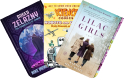
It’s beautifully written and wise in its observations. It captures Paris in the 1920s, as seen through the eyes of one of the great writers of the 20th Century. You can read this book again and again and always learn and feel something new. In my view it’s Hemingway’s best book.
Published posthumously in 1964, A Moveable Feast remains one of Ernest Hemingway's most beloved works. Since Hemingway's personal papers were released in 1979, scholars have examined and debated the changes made to the text before publication. Now this new special restored edition presents the original manuscript as the author prepared it to be published.
Featuring a personal foreword by Patrick Hemingway, Ernest's sole surviving son, and an introduction by the editor and grandson of the author, Sean Hemingway, this new edition also includes a number of unfinished, never-before-published Paris sketches revealing experiences that Hemingway had with his son Jack and…
It’s about a woman who traveled to Taos, New Mexico, in the early part of the 20th Century and made it her home for the rest of her life.
It wonderfully describes the landscape and light of New Mexico and shows why it became such a draw for later artists and writers. This is an excellent history and autobiography.
In 1917 Mabel Sterne, patron of the arts and spokeswoman for the New York avant-garde, came to the Southwest seeking a new life. This autobiographical account, long out-of-print, of her first few months in New Mexico is a remarkable description of an Easterner's journey to the American West. It is also a great story of personal and philosophical transformation. The geography of New Mexico and the culture of the Pueblo Indians opened a new world for Mabel. She settled in Taos immediately and lived there the rest of her life. Much of this book describes her growing fascination with Antonio…
One of America’s most provocative writers, Normal Mailer, critiques the work of one of America’s most original novelists, Henry Miller.
The book reveals as much about Mailer’s mentality as it does about the struggles and ultimate triumphs of Miller as he wrote in Paris in the 1930s. This is a challenging and stimulating read for anyone who loves how literature is born.
After writing about some of the most high-profile crimes in recent American history—the O.J. Simpson case, the JonBenet Ramsey case, the BTK serial killer case, and the Warren Jeffs case—I wanted to explore more deeply what drives human violence.
I turned the lens inward, combining true crime with a personal spiritual journey that examines the roots of violence from a very different perspective. It’s a book about healing the wounds handed down over generations—and about trying to break this chain in a way that goes far beyond conventional therapy. I look at the long-term effects of the war that shaped my father’s life (and helped shape mine), while venturing out past the boundaries of conventional journalism.
It’s my effort to understand more about the violence we see everywhere.