Keegan tells the story in a way that reminded
me of my first discoveries in fiction, the captivating worlds created by
Charles Dickens or Mark Twain.
Back then I was young enough to be amazed that words
on a page could become more real, more magnetic, than anything else; unlike those books I fell in love with as a teenager, Small Things Like These
has a quiet, nearly invisible magic. The world of a small Irish town becomes the
world.
The friend who recommended the book is a Jamaican sociologist—like me,
from a world unlike this book, with the added amazement of recognition across
distance.
"A hypnotic and electrifying Irish tale that transcends country, transcends time." —Lily King, New York Times bestselling author of Writers & Lovers
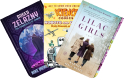
Small Things Like These is award-winning author Claire Keegan's landmark new novel, a tale of one man's courage and a remarkable portrait of love and family
It is 1985 in a small Irish town. During the weeks leading up to Christmas, Bill Furlong, a coal merchant and family man faces into his busiest season. Early one morning, while delivering an order to the local convent, Bill makes a discovery which forces him…
Fintan O’Toole’s We Don’t Know Ourselves has the rowdy elegance of an insider who
lovingly, hilariously, can detail the contradictions, plights, hypocrisies,
sanctities, and denials of a family he knows intimately.
He tells the truth, any
reader can feel, about Irish ways of double-think regarding all sorts of
political, cultural, and personal shadows.
His
Ireland made me know again, anew, my New Jersey.
Fintan O'Toole was born in the year the revolution began. It was 1958, and the Irish government-in despair, because all the young people were leaving-opened the country to foreign investment and popular culture. So began a decades-long, ongoing experiment with Irish national identity. In We Don't Know Ourselves, O'Toole, one of the Anglophone world's most consummate stylists, weaves his own experiences into Irish social, cultural, and economic change, showing how Ireland, in just one lifetime, has gone from a reactionary "backwater" to an almost totally open society-perhaps the most astonishing national transformation in modern history.
At first, Alan Shapiro’s brilliant book By
And By scared me a little with its persistent subject, the varieties of woe
— from minor to major, from ludicrous inconvenience to mortality itself.
But in fact, the book cheered me up and engaged me in its actual, central emotion, not woe but wonder: astonishment that this, too, whatever it is, can be a part of a poem, part of life.
He loves understanding: the transforming,
unquenchable work of imagination.
The latest collection from prize-winning poet, Alan Shapiro--his best yet.
The poems in BY AND BY are both painfully intimate and otherworldly, enmeshed in contemporary culture and personal life, even while they view that life, that culture with an outraged, affectionate detachment born of a big picture sense of political and literary history. By turns funny and broken hearted, ironic and troubled, with idiomatic exactness and formal range, Shapiro explores the vagaries of a globalized world that complicates, if not destroys, the connections that it claims to serve.
"Alan Shapiro has written some of the most piercing anti-elegiac elegies of…
In the late 1940s, Long Branch, a historic but run-down Jersey Shore resort town in a neighborhood of Italian, Black, and Jewish families, Robert Pinsky began his unlikely journey to becoming a poet.
Descended from a bootlegger grandfather, an athletic father, and a rebellious tomboy mother, Pinsky was an unruly but articulate high school C student whose obsession with the rhythms and melodies of speech inspired him to write.
Pinsky traces the roots of his poetry, with its vast and fearless range, back to the voices of his neighborhood, to music and a distinctly American tradition of improvisation, with influences including Mark Twain and Ray Charles, Marianne Moore and Mel Brooks, Emily Dickinson and Sid Caesar, Dante Alighieri, and the Orthodox Jewish liturgy.