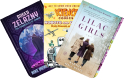
Although my professional interest is language and how to use it well, one of my hobbies is reading about history.
Most of the history we learn in school consists of short snapshots about ‘important people’ and main events, but this misses so much of the story and is often misleading. This book shows that many of the ‘truths’ and ‘facts’ about American history that are taught in school are largely myths.
For example, Woodrow Wilson is usually portrayed as a hero who attempted to establish the League of Nations. While this is true, he also established racial segregation in the federal government and launched invasions into Latin American countries.
Only by providing a more nuanced version of history in our textbooks (including the bad as well as the good), can our children be taught to think critically about the past to better inform the future.
Since its first publication in 1995, Lies My Teacher Told Me has become one of the most important - and successful - history books of our time. Having sold over two million copies, the book also won an American Book Award and the Oliver Cromwell Cox Award for Distinguished Anti-Racist Scholarship and was heralded on the front page of the New York Times in the summer of 2006. For this new edition, Loewen has added a new introduction that shows how inadequate history courses in high school help produce adult Americans who think Donald Trump can solve their problems.
Ask most people about the extent of the United States, and they will probably respond the Lower 48 States plus Alaska and Hawaii.
But the United States has also ‘owned’ a large number of other possessions over its history, ranging from now-independent countries like the Philippines, to areas like the Panama Canal Zone, to small islands that most people have never heard of like Navassa.
Although it does not fit comfortably into the typical upbeat narrative, America has been an empire for most of its history, with all of the condescension and injustice that empires usually entail. This book makes us aware of these overseas colonies, and shows how their fates have profoundly affected mainstream American history.
One powerful example is how America entered WWII to protect Hawaii, which was then only a territory and not a state.
Named one of the ten best books of the year by the Chicago Tribune A Publishers Weekly best book of 2019 | A 2019 NPR Staff Pick
A pathbreaking history of the United States’ overseas possessions and the true meaning of its empire
We are familiar with maps that outline all fifty states. And we are also familiar with the idea that the United States is an “empire,” exercising power around the world. But what about the actual territories―the islands, atolls, and archipelagos―this country has governed and inhabited?
In How to Hide an Empire, Daniel Immerwahr tells the fascinating story…
I remember the Balkan wars in the early 1990s, as I followed television and newspaper reports on events like the siege of Sarajevo.
But although some things were already quite clear at the time (the massacre at Srebrenica was a war crime and a human tragedy), I never had more than a vague idea of who were the ‘good guys’ and who were the ‘bad guys’, much less any understanding of the root causes of the wars.
This book provides an exceptional first-hand account of the various dreams, motivations, manipulations, and arrogance that lead to the implosion of Yugoslavia after Tito died, and all of the bloodshed that ensued.
"Vigorous, passionate, humane, and extremely readable. . . For an account of what has actually happened. . . Glenny's book so far stands unparalleled."-The New Republic
The fall of Yugoslavia tells the whole, true story of the Balkan Crisis-and the ensuing war-for those around the world who have watched the battle unfold with a mixture of horror, dread, and confusion.
When Croatia and Slovenia declared their independence in June 1991, peaceful neighbors of four decades took up arms against each other once again and a savage war flared in the Balkans. The underlying causes go back to business left unfinished…
From the minute you wake up until the time you fall asleep, you use language. My book shows you how language functions, and how to make it work better for you. It explains 100 ways to use and learn language more effectively in your everyday life.
Although based on research, each topic is covered in a clear, easy-to-understand manner that assumes no previous knowledge. Each topic is introduced by a question you might be wondering about (What kinds of language tricks do salespeople use to get me to buy things?).
The reader-friendly answers are given in short but informative descriptions, with a quick summary at the end, and interesting website suggestions for more information. Read Language Power and start becoming a more effective communicator.