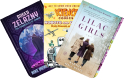
Until read this book, I took it as a given that countries had a right to request the return of antiquities that ended up in (mostly) Western museums, narratives that are now making headlines in our anti-colonial present.
Cuno explains how complex this issue is ethically, legally and philosophically. Many of the peoples whose heritage these objects represent have disappeared or no longer occupy the countries in question.
Also for the sake of the objects themselves should they be studied and maintained and made available to a wide public in a museum rather than be returned to a corrupt government?
Whether antiquities should be returned to the countries where they were found is one of the most urgent and controversial issues in the art world today, and it has pitted museums, private collectors, and dealers against source countries, archaeologists, and academics. Maintaining that the acquisition of undocumented antiquities by museums encourages the looting of archaeological sites, countries such as Italy, Greece, Egypt, Turkey, and China have claimed ancient artifacts as state property, called for their return from museums around the world, and passed laws against their future export. But in Who Owns Antiquity?, one of the world's leading museum directors…
Andy Warhol was a friend of mine for over twenty years, and I have read most of the biographies about him published since his death in 1987. None of them capture the real character and personality of the artist, as well as this fascinating memoir by the sister of Edie Sedgwick, Warhol’s first “superstar.”
It is also the story of the wealthy but famously dysfunctional Sedgwick clan, as well as a touching “letter” addressed to Edie’s brother who committed suicide at a young age.
As It Turns Out is a family story. Alice Wohl is writing to her brother Bobby, who died in a motorcycle accident in 1965, just before their sister Edie Sedgwick met Andy Warhol. After suddenly seeing Edie's image in a clip from Andy's extraordinary film Outer and Inner Space, Wohl was moved to put her inner dialogue with Bobby on the page in an attempt to reconstruct Edie's life and figure out what made Edie and Andy such iconic figures in American culture and in our collective imagination. What was it about him that enabled him to anticipate so much…
What could be a more boring premise for a novel than the inner voice of an awkward young woman who takes a job in a Tokyo neighborhood mini-mart? If Proust had written as fluidly and vividly as Ms. Murata I would have finishedRemembrance of Things Past.
For once I had to admit, "I could not put this book down!" I found it profoundly touching and realize that the ups and downs of someone with a small, modest life can be just as moving and dramatic as stories of the high and mighty.
Internationally renowned dealer and market expert Michael Findlay offers a lively and authoritative look at art's financial and emotional value throughout history.
In this newly revised and generously illustrated edition, Findlay draws on a half-century in the business and a passion for great art to question and redefine what we mean by "value," addressing contemporary developments in this conversation: the rise of NFTs and digital art; the auction house as theatre; the relationship between art and society's fraught political landscape; and the impact of the pandemic.
With style and wry wit, Findlay demystifies how art is bought and sold while emphasizing the importance of art's essential, noncommercial worth. Findlay has distilled a lifetime's experience in this indispensable guide for today's sophisticated and discerning audience.