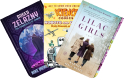
The 55th-century-and-counting end-of-times narrative of Millennium is a time-travel story, yes, but it is more than that.
It manages to dodge the gleeful “paradoxes” at the heart of classical travellers-in-time stories while acknowledging the difficulties of interfering in the established timeline.
Bill Smith, the world-weary 20th-century airplane accident investigator, and his connection with Louise Baltimore, a fixer from dozens of millennia in the future, is one of the oddest relationships in fiction, and Varley’s account of the terminal ennui at the twilight of humanity is distressingly plausible.
If humans can only survive by going deep into history to divert “victims” of catastrophic accidents into a new (if bewildered) life in their far future in order to keep a more or less functioning society alive, what does this say about our survival? Pessimistic but riveting.
In the skies over Oakland, California, a DC-10 and a 747 are about to collide. But in the far distant future, a time travel team is preparing to snatch the passengers, leaving prefabricated smoking bodies behind for the rescue teams to find. And in Washington D.C., an air disaster investigator named Smith is about to get a phone call that will change his life...and end the world as we know it.
This book attempts the seemingly impossible: to tell the Big Story from the very beginning, not just of our proto-species but of the universe itself, to the present, all in one volume, and have it not only make sense but actually have explanatory value.
One of the cover blurbs calls it “history at an unprecedented scale,” which is no exaggeration. It is a bravura act of synthesis and a page-turner, too.
An introduction to a new way of looking at history, from a perspective that stretches from the beginning of time to the present day, "Maps of Time" is world history on an unprecedented scale. Beginning with the Big Bang, David Christian views the interaction of the natural world with the more recent arrivals in flora and fauna, including human beings. Cosmology, geology, archeology, and population and environmental studies - all figure in David Christian's account, which is an ambitious overview of the emerging field of 'Big History.' "Maps of Time" opens with the origins of the universe, the stars and…
Stephen King, really? Sixty-plus books, all of them best sellers? Does he need support? Recommendations?
But in Holly, he has not only two of the creepiest (and creakiest) villains in his canon but one of his most engaging protagonists, a borderline autistic, nicotine-addicted, mother-harassed young woman trying really, really hard to make a life on her own terms, and succeeding. It is impossible not to cheer as she finally deals decisively with her most unexpected opponents.
Holly Gibney, one of Stephen King’s most compelling and ingeniously resourceful characters, returns in this thrilling novel to solve the gruesome truth behind multiple disappearances in a midwestern town.
“Sometimes the universe throws you a rope.” —BILL HODGES
Stephen King’s Holly marks the triumphant return of beloved King character Holly Gibney. Readers have witnessed Holly’s gradual transformation from a shy (but also brave and ethical) recluse in Mr. Mercedes to Bill Hodges’s partner in Finders Keepers to a full-fledged, smart, and occasionally tough private detective in The Outsider. In King’s new novel, Holly is on her own, and up…
There are deep dives into the three iconic wooden artifacts of the title, the longbow, the schooner, and the violin, which to me, exemplify the inventive ways our species has employed this most extraordinary of substances. These narratives are surrounded by and embedded in a series of essays about trees, forests, and the wood they produce.
The result is a sweeping, discursive, digressive, encompassing history, exploring our relationship with wood, from ancient times to the present, from the forest to the workshop and to the showroom.