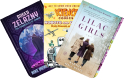
Ravensbrück
is a meticulous, gut-wrenching account of Hitler’s horrific women-only death
and torture concentration camp, which fell into Soviet hands after the war and
was largely erased from history.
This book is personal to me because my
Austrian grandmother was imprisoned there for nearly five years because of her
public defiance of Hitler. I knew she was only eighteen when she entered the
camp and endured time as a sex slave in the camp brothel in an effort to
survive.
I also knew that she had been stabbed with a bayonet and left for dead
during the death march she was forced to undertake as liberators closed in
during the final days of the war. But that’s all I knew of her horrific
nightmare at Ravensbrück until I discovered this historical treasure trove.
Ravensbrück tells the story of the notorious camp from its inception to its end—through the voices and lens of dozens of survivors who poured out their
stories to the author. The narrative is riveting and horrific. In addition to
being an extermination camp, Ravensbrück was known for its unconscionable
medical experiments on Polish prisoners.
Through all the unthinkable misery and
cruelty, what stands out is the remarkable grit, strength, and resilience of the
thousands of women who refused to be crushed or silenced. Ravensbrück is a
historical jewel and, from my perspective, a must-read. These courageous women
have voices and stories that the world needs to hear.
Months before the outbreak of World War II, Heinrich Himmler—prime architect of the Holocaust—designed a special concentration camp for women, located fifty miles north of Berlin. Only a small number of the prisoners were Jewish. Ravensbrück was primarily a place for the Nazis to hold other inferior beings: Jehovah’s Witnesses, Resistance fighters, lesbians, prostitutes, and aristocrats—even the sister of New York’s Mayor LaGuardia. Over six years the prisoners endured forced labor, torture, starvation, and random execution. In the final months of the war, Ravensbrück became an extermination camp. Estimates of the final death toll have ranged from 30,000 to 90,000. …
I’m
a sucker for hard knock coming-of-age stories and love personal narrative. So,
it was a given that I would fall for this book.
This story is so raw, honest,
and beautifully written that its 560 pages flew by. The narrator takes readers
through a childhood of unthinkable trauma and a community caught in the throes
of the Big Pharma-created OxyContin crisis. It’s about navigating piled-on
adversity, being human, and that internal drive to survive.
It’s also a powerful
reminder that simple acts of kindness and occasional human angels can make all
the difference in a person’s life. There’s a reason Demon Copperhead won the Pulitzer Prize for
Fiction. It’s that good.
Demon's story begins with his traumatic birth to a single mother in a single-wide trailer, looking 'like a little blue prizefighter.' For the life ahead of him he would need all of that fighting spirit, along with buckets of charm, a quick wit, and some unexpected talents, legal and otherwise.
In the southern Appalachian Mountains of Virginia, poverty isn't an idea, it's as natural as the grass grows. For a generation growing up in this world, at the heart of the modern opioid crisis, addiction isn't an abstraction, it's neighbours, parents, and friends. 'Family' could mean love, or reluctant foster…
This
novel, inspired by the little-known story of Austrian-born scientist Lise
Meitner, is part spy thriller, part love story, part history lesson. And it was
so gripping and fast paced that I devoured it in one day.
The story is set in
Los Alamo, New Mexico in the 1940s — where J. Robert Oppenheimer and his team
of scientists were engaged in an all-stakes race against the Germans to procure
the nuclear bomb.
Throughout the book, Eliasberg uses her character, Hannah, to
set the record straight about the fact that it was a woman scientist and
Austrian Jew who discovered nuclear fission before she was forced to flee Germany
to avoid Hitler’s concentration camps. This cinematic story belongs on the big
screen right beside the blockbuster Oppenheimer.
In 1945, Hannah Weiss, a Jewish-Austrian scientist, is removed from her laboratory at the Los Alamos National Lab and taken to Leavenworth Prison for interrogation. Major Jack Delaney, a rising star in the shadowy world of military intelligence, is convinced that someone in the United States has been sharing information with the Nazi party. The captivating, raven-haired, female scientist in New Mexico is his primary suspect. Across the globe, countries are racing to perfect the atomic bomb--a weapon powerful enough to stop WWII, and, perhaps, all future wars. But for Hannah, who has been sending mysterious postcards to a contact…
A hustler dad. An abusive stepfather. A suffocating religious home life. And a girl determined to break free.
In her gripping NYT-bestselling memoir, Ingrid Ricks takes readers into a tumultuous home life riddled with poverty, oppression and the suffocating brand of Mormon religion she is desperate to escape. Her chance finally comes when she begins hitting the road with her freewheeling dad, traveling throughout the Midwest, selling tools and hanging around with the men on his shady revolving sales crew. It feels like freedom from her controlling mother and cruel, authoritarian stepfather. But it comes with its own disappointments and dysfunctions, and she soon learns the lesson that will change her life: she can't look to others to save her; she has to save herself.