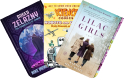
Long before the emergence of groups like ISIS and Hamas,
there existed the Boxers, a faction of religious fanatics in China who sought
to eliminate all foreigners in the country at the turn of the twentieth
century.
Lanxin Xiang, a masterful historian, expertly narrates the story of
this uprising from various perspectives, delving into the motivations and
actions of all the key players: the Boxers, the Chinese court, and the foreign
powers involved.
As a skilled detective of historical events, Xiang unveils
the hidden truths behind this tragic episode, revealing the hubris and
short-sightedness of arrogant diplomats and courtiers, the fervor of desperate
peasants, and the underlying factors that drove them into a collision course
resulting in a conflagration that irrevocably transformed the Far East.
This
captivating narrative not only challenged my preconceived notions about China
and the world in the year 1900 but also proved to be an engrossing page-turner
that I simply couldn't put down.
In his enthralling book, Carlos Eire narrates the epic tale
of the Protestant Reformation and the profound repercussions it set in motion,
demonstrating how it shaped the world we inhabit today.
From the remarkable
discovery of a Roman mummy, through the travails of a young, then unknown monk
called Martin Luther, into the wars of religion and the age of enlightenment,
Eire takes the readers on a journey that they will never forget.
What I found most remarkable about this book is the
author's remarkable talent for resurrecting a bygone era. Within these pages,
readers will encounter austere inquisitors, fervent theologians, monarchs,
nobles, corrupted popes, intriguing thinkers, witch hunters, and village
priests.
Throughout the narrative, one is afforded the opportunity to eavesdrop
on impassioned debates that forever altered the course of history. Eire's tour
de force had a transformative effect on my perspective regarding religion and
spirituality.
It illuminates the tangible reality of these concepts and
underscores their inseparable connection to our identities, emotions, and everything
we are.
A lively, expansive history of the Protestant and Catholic Reformations and the momentous changes they set in motion
This fast-paced survey of Western civilization's transition from the Middle Ages to modernity brings that tumultuous period vividly to life. Carlos Eire, popular professor and gifted writer, chronicles the two-hundred-year era of the Renaissance and Reformation with particular attention to issues that persist as concerns in the present day. Eire connects the Protestant and Catholic Reformations in new and profound ways, and he demonstrates convincingly that this crucial turning point in history not only affected people long gone, but continues to shape…
To truly grasp the world we inhabit, you simply must delve
into this masterful work by Serhii Plokhy, centered on the Russo-Ukrainian War.
As a Ukrainian historian hailing from Harvard University, Plokhy delivers a
poignant and contemplative account of the conflict that gripped his homeland,
all while weaving it together with astute and insightful analysis.
Within the pages of this riveting narrative, Plokhy embarks
on a journey into the annals of history, unlocking the elements of Russian and
Ukrainian pasts that illuminate the reasons behind Russia's descent into
dictatorship and Ukraine's emergence as a vibrant yet tumultuous democracy.
Featuring a diverse cast of characters, extending well
beyond the prominent figures of Putin and Zelensky, the two warring presidents,
Plokhy narrates the war's tumultuous events with fervent passion and
unwavering clarity.
His work possesses a profound depth that remains deeply
engaging, affording readers the invaluable opportunity to fathom the turmoil in
Eastern Europe and its as-yet-unseen implications for the world's future.
Despite repeated warnings from the White House, Russia's invasion of Ukraine in February 2022 shocked the world. Why did Putin start the war-and why has it unfolded in previously unimaginable ways? Ukrainians have resisted a superior military; the West has united, while Russia grows increasingly isolated.
Serhii Plokhy, a leading historian of Ukraine and the Cold War, offers a definitive account of this conflict, its origins, course, and the already apparent and possible future consequences. Though the current war began eight years before the all-out assault-on February 27, 2014, when Russian armed forces seized the building of the Crimean…
Shrouded in government secrecy, clouded by myths and propaganda, the enigmatic tale of Nazi fugitives in the early Cold War has never been properly told—until now.
In the aftermath of WWII, the victorious Allies vowed to hunt Nazi war criminals "to the ends of the earth." Yet many slipped away to the four corners of the world or were shielded by the Western Allies in exchange for cooperation.
Most prominently, Reinhard Gehlen, the founder of West Germany's foreign intelligence service, welcomed SS operatives into the fold. This shortsighted decision nearly brought his cherished service down, as the KGB found his Nazi operatives easy to turn.