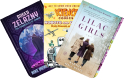
Across the world the world, all
of us were stuck in our apartments, homes, and attics for almost two years. Now
that COVID has calmed down, many of our behaviors remain the same, and we
don’t go out and do all the things we used to do.
We don’t walk as far, go to
as many concerts, see friends at parks, stroll in parks, and check out the new
downtown stores on our bikes and scooters.
So this book – Encounterism – is a
love letter to those moments when we interact with people, whether at the
hairdresser, the park, or the movie theater – and we change just a little.
I
loved the personal descriptions of his own encounters, which included great facts
and tidbits about the field. It is well-written, intensely personal, and strongly
recommended.
The light touch of a hairdresser's hands on one's scalp, the euphoric energy of a nightclub, huddling with strangers under a shelter in the rain, a spontaneous snowball fight in the street, a daily interaction with a homeless man-such mundane connections, when we closely inhabit the same space, and touch or are touched by others, were nearly lost to "social distancing." Will we ever again shake hands without a thought?
In this deeply rewarding book, Andy Field brings together history, science, psychology, queer theory, and pop culture with his love of urban life and his own experiences-both as a…
Welive in suburbs, high-density downtown cities,
exurbs, rural areas – but most of us don’t really think about the way that
things around us have been designed.
Especially for those of us with children,
whole schools of thought have been created, designed a variety of chairs,
tools, blocks, and play spaces, and then been replaced by other ways of doing
the same materials. This book tackles jungle gyms, school classrooms, EPCOT,
and a variety of other places that are all too familiar to us, but in new and
creative ways.
It is easy to read with lots of images – highly recommended.
"Nothing short of spectacular . . . A secret guidebook to a landscape in which we all dwell, but so often fail to see." --Tom Vanderbilt, bestselling author of Traffic
From building blocks to city blocks, an eye-opening exploration of how children's playthings and physical surroundings affect their development.
Parents obsess over their children's playdates, kindergarten curriculum, and every bump and bruise, but the toys, classrooms, playgrounds, and neighborhoods little ones engage with are just as important. These objects and spaces encode decades, even centuries of changing ideas about what makes for good child-rearing--and what does not. Do you choose…
Weuse pieces of paper to pay people whom we let into
our homes to fix our most intimate spaces. We provide details about ourselves
all the time over the phone and the Internet. Most of us do not worry too
much about the consequences of bad-intentioned people getting access to that
information, or our bank accounts, or our social media accounts.
This book –
written in a dry prose – nevertheless tells the fascinating story of how our
society balances the enormous risks – robbery, impersonation, etc. –
with our dislike of onerous security measures.
How do we really know that those
green pieces of paper are dollars that our corner store will accept in exchange
for bread? And how can we develop trust in a society where there are clearly
people who wish us harm?
This book, written by a security expert, answers those
important questions.
In today's hyper-connected society, understanding the mechanisms of trust is crucial. Issues of trust are critical to solving problems as diverse as corporate responsibility, global warming, and the political system. In this insightful and entertaining book, Schneier weaves together ideas from across the social and biological sciences to explain how society induces trust. He shows the unique role of trust in facilitating and stabilizing human society. He discusses why and how trust has evolved, why it works the way it does, and the ways the information society is changing everything.
Despite the devastation
caused by the magnitude 9.0 earthquake and 60-foot tsunami that struck Japan in
2011, some 96% of those living and working in the most disaster-stricken region
of Tōhoku made it through.
What accounts for the exceptionally high
survival rate? And why is it that some towns and cities in the Tōhoku region
have built back more quickly than others?
Black Wave illuminates two critical factors
that directly influenced why survival rates varied so much across the
Tōhoku region following the 3/11 disasters and why the rebuilding process has
also not moved in lockstep across the region.