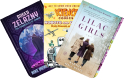
This is brilliantly written and deeply researched, with a wonderful cast of working-class autodidacts and some surprisingly well-known middle-class authors who did everything in their power to denigrate this hard-won learning.
It’s both revelatory and deeply moving. My only reservation was confessing that I had taken so long to discover it. It is a fantastic book and still the fundamental text in the field.
Now in its second edition, this landmark book provides an intellectual history of the British working classes from the preindustrial era to the twentieth century. Drawing on workers' memoirs, social surveys, library registers, and more, Jonathan Rose discovers which books people read, how they educated themselves, and what they knew. A new preface uncovers the author's journey into labor history, and its rewarding link to intellectual history.
I knew E.L. Doctorow from his gangster novel Billy Bathgate and loved his quirky characters and beautifully controlled prose. The March is a story set in the American Civil War, more specifically, General Sherman’s famous scorched-earth march through the Confederate South from Atlanta to Savannah.
We don’t see a lot of Sherman, though he’s well drawn: the book centres on the oddball mix of soldiers, deserters, civilians, and photographers caught up in the army’s slipstream and how it changed their lives.
I admired it for its realism and the clear sense of the randomness of war: who survives, who dies, who flourishes, and who is overwhelmed. An army is far less of a man’s world than one might expect, and Doctorow draws some memorable female characters.
WINNER OF THE NATIONAL BOOK CRITICS CIRCLE AWARD WINNER OF THE PEN/FAULKNER AWARD NEW YORK TIMES BESTSELLER
In 1864, Union general William Tecumseh Sherman marched his sixty thousand troops through Georgia to the sea, and then up into the Carolinas. The army fought off Confederate forces, demolished cities, and accumulated a borne-along population of freed blacks and white refugees until all that remained was the dangerous transient life of the dispossessed and the triumphant. In E. L. Doctorow’s hands the great march becomes a floating world, a nomadic consciousness, and an unforgettable reading experience with awesome relevance to our own…
I read fewer newly published books than I would want, partly because I am so busy reading potential texts for publication. But I was delighted to pick up a copy of this excellent first book by the historian Daniel Cowling. The author works at the National Army Museum, and this experience of a public-facing institution stands him in good stead, with an excellent writing style and an eye for the significant vignette.
In 1945, the Allied forces inherited a broken country, starving people, devastated cities, and a recognition that all the institutions that might provide leadership in Germany had been thoroughly Nazified over the previous 12 years. The horror of the concentration camps hung over all their relations, but the occupation administration gradually prepared Germany for re-introduction into the family of nations. It is a fine and fascinating book.
Germany, spring 1945. Hitler is dead and his armies crushed. Across the conquered Reich, cities lie devastated by Allied saturation bombing; their traumatised populations, exhausted and embittered by defeat, face a future of acute privation and hardship. Such was the broken state of the nation in which a British civilian and military force arrived in the spring and summer of 1945. Their zone of occupation was the northern and northwestern part of Germany, the country's former industrial heartland. Their task? To build democracy from the ruins of Hitler's Reich, and, having defeated Nazism on the battlefield, to 'win the peace'…
A top historian of communication Andrew illuminates how books were used in war across the twentieth century—both as weapons and as agents for peace
We tend not to talk about books and war in the same breath—one ranks among humanity’s greatest inventions, the other among its most terrible. But as esteemed historian Andrew Pettegree demonstrates, the two are deeply intertwined.
This book explores the various roles that books have played in conflicts throughout the globe. With precise historical analysis and sparkling prose, The Book at War accounts for the power—and the ambivalence—of words at war.